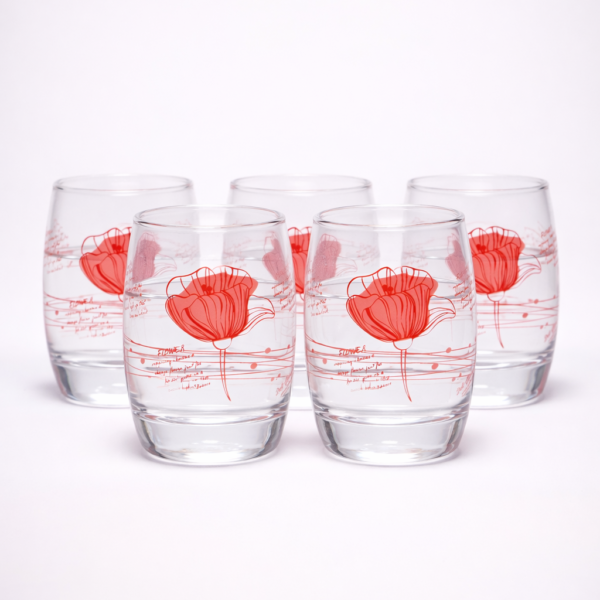
Glassware for Indian Homes, Cafés, Restaurants & Hotels
Six glassware collections, stocked as sets for homes and in volume for hospitality businesses – drinking glasses, whiskey glasses, highball glasses, dessert bowls, storage jars and borosilicate travel mugs. Below each collection you will find the size, material and shape guidance we normally give buyers over the phone, so you can order correctly the first time.
Most glassware regret comes from three decisions made too quickly: the wrong capacity, the wrong material for the temperature, and a rim that was never built for daily washing. This page fixes all three before you add anything to the cart.
If you are buying for a home, start with the Best Glassware For… section. If you are buying for a business, skip to Bulk Buying – quantities, standardisation and the BIS and FSSAI points that matter to a hospitality buyer are covered there.
Most-ordered sizes across our range: 300 ml tumblers, 250-300 ml whiskey glasses and 300-350 ml highball glasses. If you are unsure, those three cover almost every situation.
The Range
SILICOX Glassware Collections
Six collections covering drinkware, barware, serveware and storage – in retail sets and bulk quantities.
If you are buying one thing from this page, buy these. A 300 ml tumbler is the workhorse of an Indian kitchen – water, juice, chaas, nimbu pani, soft drinks. Our drinking glass collection uses food-grade soda-lime glass with a deliberately thicker base, because the base is where a tumbler actually takes damage: set down hard on granite, stacked, knocked against a steel sink. Thin-based tumblers photograph beautifully and start chipping within weeks of real use.
Whiskey Glasses (Rocks / Lowball)
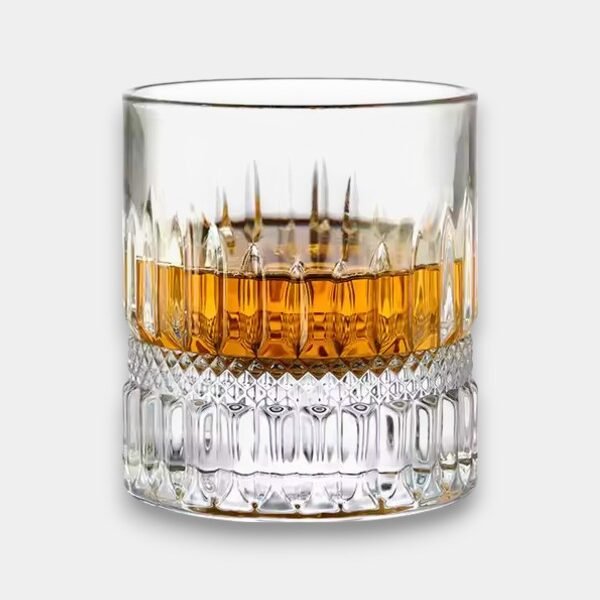
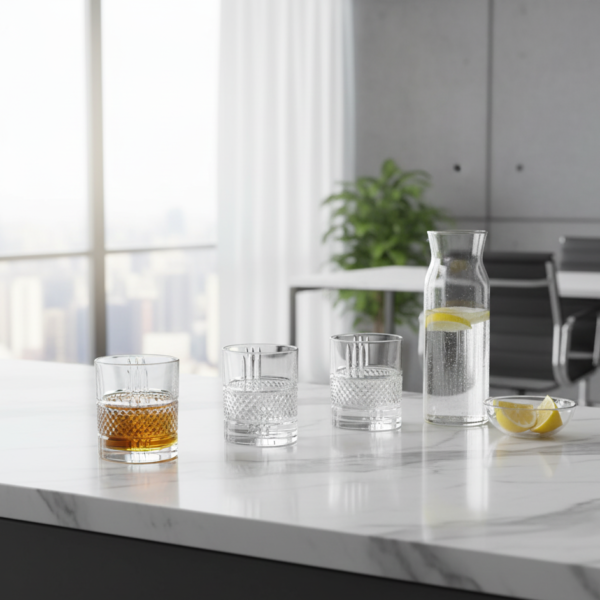
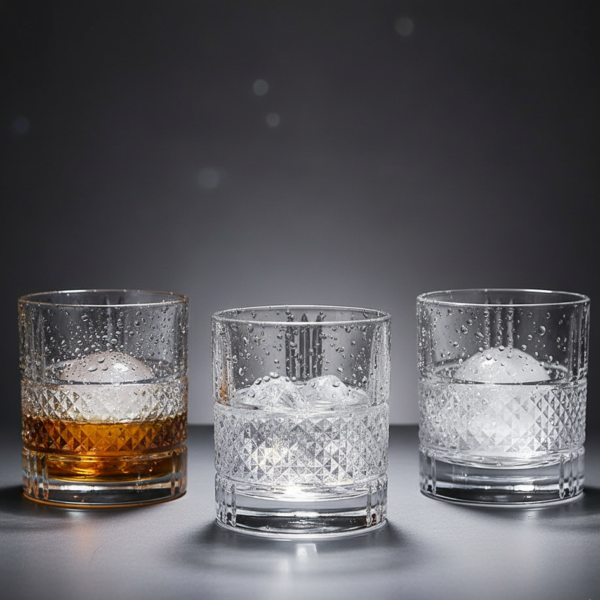
A whiskey glass – also called a rocks glass or lowball – is not a shorter tumbler. It needs a wide mouth so aroma can open up, and a heavy base so the glass stays planted when a large ice cube goes in. Ours sit in the 250-300 ml range, which holds a standard pour plus ice without looking oversized. Sets of two suit gifting, sets of six suit a home bar, and bulk quantities suit lounges that need every table to match. See the whiskey glass range →
Highball Glasses (Collins Style)
Tall and narrow, the highball – close cousin of the Collins glass – is what you want for anything served long over ice: mojitos, iced tea, cold coffee, jal jeera, virgin mixes. Height gives ice and garnish room to sit, and the narrow body keeps carbonation from going flat as quickly. Building a home bar? Pair these with whiskey glasses and you have covered roughly ninety percent of what you will ever serve. Browse highball glasses →
Ice Cream Bowls & Dessert Serveware
Plastic dulls, steel hides the dessert, glass does neither. Smaller bowls suit a plain two-scoop serving; footed sundae bowls give height and room for sauce, dry fruit and wafer. For a dessert counter, visibility does a measurable part of the selling before the customer tastes anything. Shop ice cream bowls →
Glass Storage Jars
Airtight lids keep contents dry through a Gujarat monsoon, and transparency means you can see what is running low without opening six containers. Wide necks matter more than buyers expect – a jar a serving spoon will not fit into becomes the jar nobody uses. View glass storage jars →
Glass Travel Mugs
Borosilicate body, so hot chai poured straight in is not a risk. Silicone sleeve for grip, sealing lid for the commute. People switch to glass here for one reason: tea and coffee in glass taste like tea and coffee, with none of the plastic aftertaste that creeps into cheaper mugs after a few months. Shop glass travel mugs →
Decide Fast
Best Glassware For…
Find your situation, get a specific order list. No browsing required.
Recommended glassware order lists for different household, hospitality and gifting situations
From handling these orders
First-time home buyers almost always over-buy on variety and under-buy on quantity – four different shapes, four pieces each. Six months later they own one full set and three orphans. Buy six of one design before you buy two of three designs.
The Basics
What Is Glassware?
Glassware refers to drinking, serving and storage products made from glass – including tumblers, water glasses, juice glasses, whisky and rocks glasses, highball and Collins glasses, wine glasses, beer mugs, dessert bowls, carafes, storage jars and travel mugs. Different types are shaped for specific beverages, temperatures and serving styles, and the material differs by intended use: soda-lime for cold drinks, borosilicate for hot, tempered for high-volume commercial service.
Glassware sits inside the broader tableware family alongside dinnerware and cutlery, and overlaps with two narrower terms you will see on product listings: drinkware, meaning anything you drink from, and serveware, meaning anything food is presented in. A dessert bowl is serveware. A tumbler is drinkware. Both are glassware.
The reason glass has never been displaced by steel or plastic comes down to one property: it is non-porous. Nothing soaks into the surface. It does not hold yesterday’s masala, does not stain from turmeric or coffee, and adds no flavour of its own. That single property is why a banquet hall and a two-person kitchen both reach for glass when hygiene and presentation matter – and it is why food-grade glass remains the default across the Indian hospitality industry.
Glassware families with examples, defining traits and matching SILICOX collections
Family
Includes
Defining Trait
Shop
Drinkware
Tumblers, water glasses, juice glasses
No stem, flat base, walls built for daily handling
Shape is not decoration. It controls aroma, temperature, carbonation and how much you actually pour.
Short and wide for spirits you want to smell. Tall and narrow for anything with ice, mixer or fizz. Stemmed for anything that must stay cool in your hand. Heat-resistant borosilicate for anything served hot. Once you know which of those four situations you are in, the glass chooses itself.
Guide matching each drink or dessert to the correct glass type, capacity, reason and where to buy
Drink / Use
Glass
Capacity
Why That Shape
Shop
Daily water
Tumbler
250-350 ml
Straight sides pour cleanly and stack in a cabinet
The sizing mistake almost everyone makes
A glass that is too large makes a normal pour look mean. A glass that is too small means constant refilling. Match capacity to the serving first, then pick the design.
Material Guide
Which Glass Material Should You Buy?
Four material names appear on nearly every listing. Each one changes how the glass behaves in your kitchen.
Soda-Lime Glass – the right default for home use
If you are buying glassware for daily home use, soda-lime glass gives the best balance of durability, clarity and price. It is the standard composition for tableware worldwide, and most of our drinking glasses, juice glasses and whiskey glasses use food-grade soda-lime because it simply performs well for cold and room-temperature service. Its one real limitation is heat: it expands enough under a sudden temperature change to crack, so it is the wrong choice for boiling liquid.
Borosilicate Glass – buy this if hot liquid is involved
Borosilicate contains boron trioxide, which cuts thermal expansion dramatically. That is the whole reason it survives hot chai poured straight in while an ordinary glass splits. If you want a mug for tea or coffee, buy borosilicate and do not compromise – a thicker ordinary glass is not a substitute. Our glass travel mugs use borosilicate for exactly this reason.
Tempered Glass – for anything washed several times a day
Tempering heats finished glass and cools its surface rapidly, locking the outer layer into compression. The result resists chips and impact far better than annealed glass, and if it does fail it crumbles into small blunt granules rather than sharp shards – which matters on a service floor. This is the specification to ask for when fitting out a restaurant, café or bar.
Crystal and Lead-Free Crystalline – presentation pieces
Traditional lead crystal adds lead oxide for weight and light dispersion. The health question concerns long contact – spirits stored in a lead crystal decanter for months, not a drink poured and finished in an hour. Modern lead-free crystalline replaces lead oxide with barium, zinc or potassium oxide and reaches similar brilliance without that question. Plain soda-lime and borosilicate drinking glass contains no added lead in the first place.
Soda-lime, borosilicate, tempered and crystal glass compared on thermal shock, impact resistance, break pattern and best use
Property
Soda-Lime
Borosilicate
Tempered
Crystal / Crystalline
Thermal shock
Low
High
Moderate
Low
Chip & impact resistance
Standard
Standard to good
Highest
Low – thin walls chip easily
If it breaks
Sharp shards
Sharp shards
Blunt granules – safer failure
Sharp shards
Clarity & weight
Clear, medium weight
Very clear, light
Clear, heavier
Highest brilliance, heavy
Relative cost
Lowest
Moderate
Moderate to high
Highest
Buy it for
Everyday home drinkware
Hot drinks, temperature swings
Restaurants, cafés, bars, hotels
Display and premium gifting
About lids and BPA
The glass body is never the BPA question – lids are. If a travel mug or jar has a plastic lid, check that it is food-grade and BPA-free, since that is the component actually in contact with hot liquid and steam.
Head to Head
Glassware Comparisons
The six comparisons buyers actually search before ordering.
Highball vs Tumbler
A tumbler is short and wide for everyday water and juice. A highball is tall and narrow for long drinks with ice and mixer. If ice and a mixer are involved, buy the highball.
Highball glass compared with tumbler on shape, capacity, ice capacity and typical use
In everyday Indian retail these are the same product. “Rocks glass” and “lowball” describe a short, wide, heavy-based glass; “whiskey glass” is the common shopping term for it. A true tasting glass – narrow-topped and tulip-shaped – is a separate, more specialised item.
Whiskey glass, rocks glass and tasting glass compared
Borosilicate resists heat. Tempered resists impact. They solve different problems, so the question is which failure you are trying to prevent – cracking from hot liquid, or chipping from constant handling.
Borosilicate glass compared with tempered glass on heat resistance, impact resistance and best use
Factor
Borosilicate
Tempered
Made by
Different chemical composition
Heat treatment after forming
Heat resistance
Excellent
Moderate
Impact resistance
Standard
Highest
Break pattern
Sharp shards
Blunt granules
Buy for
Tea, coffee, hot serving
High-volume washing and handling
Glass vs Ceramic
Glass shows the drink and never absorbs flavour. Ceramic holds heat longer and hides everything inside. For cold drinks and presentation, glass wins. For a mug that keeps coffee warm at a desk, ceramic has an edge – unless you want to see the drink, in which case borosilicate closes the gap.
Glass compared with ceramic drinkware on visibility, heat retention, weight, chipping and cost
Factor
Glass
Ceramic
Visibility
Full – shows layers and colour
Opaque
Heat retention
Lower
Higher
Weight
Lighter
Heavier
Chipping
Chips at the rim
Glaze chips and can flake
Best for
Cold drinks, desserts, presentation
Hot beverages at rest
Glass vs Stainless Steel
Steel is effectively unbreakable and better for travel and outdoor use. Glass is neutral in taste, easier to see into and easier to verify as clean. For dining and service, glass. For a trek or a school bag, steel.
Glass compared with stainless steel drinkware on taste, durability, presentation and hygiene checking
Factor
Glass
Stainless Steel
Taste
Completely neutral
Faint metallic note with acidic drinks
Durability
Breaks on hard impact
Survives drops and dents
Presentation
Shows the drink
Opaque
Checking cleanliness
Visible at a glance
Hard to inspect inside
Best for
Dining, service, desserts
Travel, outdoors, rough handling
Clear Glass vs Coloured Glass
Clear glass is the safer commercial choice because it shows the drink and hides nothing about cleanliness. Coloured glass adds character to a table setting but makes it harder to spot residue and harder to reorder an exact match later.
Clear glass compared with coloured glass on presentation, cleanliness checking, reordering and best use
Factor
Clear
Coloured
Shows the drink
Yes
Partially or not at all
Spotting residue
Easy
Harder
Matching a reorder
Straightforward
Shade can vary between batches
Best for
Restaurants, cafés, everyday use
Styled home tables, gifting
Machine-Made vs Handmade
Machine-made glassware is consistent and reorderable, which is exactly what a home set or a business needs. Handmade glassware varies piece to piece and suits gifting or display, where the variation is the point.
Machine-made versus handmade glassware compared on consistency, seam, wall thickness and replaceability
Factor
Machine-Made
Handmade
Consistency
Identical across the batch
Varies piece to piece
Mould seam
Faint seam usually visible
None
Wall thickness
Even, generally thicker
Thinner, slightly uneven
Replacing a broken piece
Reorder the same SKU
Rarely an exact match
Best for
Homes, restaurants, hotels, bulk
Gifting, display, collector pieces
Glass forming itself is the same in both cases at the start – silica sand, soda ash and limestone melted together. Machine production drops molten gobs into moulds and presses or blows them at speed, then anneals the pieces in a controlled cooling tunnel to release internal stress. That annealing step is not optional; glass cooled too fast holds stress and fails later for no visible reason.
Reference
Glassware Size Chart for India
Standard capacities across Indian homes and hospitality, with what to order for each.
Standard Indian glassware capacity chart with what each size is built for and where to buy
Listed capacity is usually brim-full volume. Practical serving volume runs roughly 15-20% lower once you leave headroom for ice and pouring.
Build Quality
Rim, Base and Thickness: What Decides How Long a Glass Lasts
Two glasses can look identical in a product photo and behave completely differently after three months. The difference is almost always here.
The rim decides how soon a glass chips. The base decides whether it tips or cracks. Wall thickness decides how it feels to drink from. For daily home use or any commercial setting, prioritise a fire-polished or rolled rim over a thin cut rim, and a thick base over a light one.
What we see in reorders
Across the bulk orders we handle, the most common reason a restaurant replaces glassware is not a dropped glass – it is a chipped rim. Thin-rim tumblers get retired long before the body ever fails, because a chipped rim cannot be served from. That is why heavier commercial-grade designs usually work out cheaper per year of service even though they cost more per piece.
Rim Types
Cut, fire-polished and rolled glass rims compared on finishing, chip resistance and best use
Rim
How It’s Finished
Chip Resistance
Best For
Cut (cold) rim
Cut and ground flat, leaving a thin sharp edge
Lowest
Occasional-use fine pieces
Fire-polished rim
Reheated so the edge softens and rounds
Good
Most quality home drinkware
Rolled / beaded rim
Edge rolled outward into a thicker bead
Highest
Cafés, canteens, banquet halls
Run a finger lightly around the rim of any glass you are evaluating. A good rim feels smooth and slightly rounded. A rim that feels sharp or catches on skin will chip.
Base Types
Flat base – the standard tumbler foot. Stable, stackable, easy to store.
Heavy or weighted base – a thick slab of glass at the bottom, used on rocks glasses. Lowers the centre of gravity so the glass does not tip when ice goes in.
Footed base – a short pedestal, common on sundae and dessert bowls. Lifts the serving and reads as more premium.
Stemmed base – a full stem for wine, keeping hand warmth away from the drink.
Wall and Base Thickness
Thin, medium and thick-walled glassware compared on feel, durability and recommended setting
Build
Feel
Durability
Recommended For
Thin-walled
Light, refined on the lip
Chips earliest
Occasional use, display, gifting
Medium-walled
Balanced weight
Handles normal home use well
Everyday household drinkware
Thick-walled, heavy base
Solid, noticeably weighty
Best resistance to chips and knocks
Bars, cafés, restaurants, hotels
Thicker is not automatically safer with heat
Uneven thickness makes thermal shock worse, because one part of the wall expands faster than another. For hot drinks, choose borosilicate – not simply a heavier ordinary glass.
Standards
Glassware Quality Grades, BIS and FSSAI in India
What “food-grade” actually means here, and which Indian standards apply to glass tableware.
Glass tableware in India is covered by IS 1961, the Bureau of Indian Standards specification for glass tableware. It is a voluntary standard for tableware – an ISI mark is optional unless a specific Quality Control Order applies to that product. Separately, under the FSS (Packaging) Regulations, 2018, glass that contacts food must be free from stones, cords, seeds, sharp edges, chipping, cracks, mould marks, blisters, pinholes and other visible defects. In February 2026 FSSAI issued a draft amendment that explicitly brings kitchenware and tableware into the definition of food contact material.
For a home buyer this mostly translates into what you can check with your own eyes. For a hospitality buyer it matters more, because your FSSAI-licensed kitchen is accountable for what your food and drink touches. The February 2026 draft amendment is worth watching if you supply or operate a food business – it moves tableware from an implied requirement to a defined one.
How to Judge Glassware Quality Without a Lab
Rim – run a finger round it. Smooth and rounded is good; sharp or catching is not.
Base – hold it to light and look for stress marks, waves or an off-centre thickness.
Clarity – a faint green or grey cast usually indicates higher iron content in the batch. Not unsafe, but it reads cheaper on a table.
Bubbles and seeds – small trapped bubbles are a forming defect and become weak points.
Mould seam – a faint seam is normal on machine-made glass. A raised, rough seam is poor finishing.
Ring test – tap the rim gently. A clean tone suggests even, unstressed glass; a dull thud can indicate a flaw.
Stand test – place six on a flat surface. All six should sit without rocking. Rocking means an uneven base and a shorter life.
Before a large order
Ask for a sample piece and run these seven checks yourself, then put it through one real wash cycle in your own kitchen. Twenty minutes of checking prevents a wrong order of two hundred pieces.
Standards information above is general guidance, not a compliance certification. For any specific product’s conformity status, ask us directly and we will share what documentation is available for that line.
Safety
Dishwasher, Microwave, Freezer and Oven Safety
The most common cause of broken glassware in Indian kitchens is not dropping. It is temperature.
Plain soda-lime, borosilicate and tempered glassware are all dishwasher safe. Only borosilicate is genuinely comfortable with hot liquid and repeated microwave use. Nothing with metallic trim goes in a microwave. Nothing moves from freezer to hot water directly.
Glassware safety chart showing dishwasher, microwave, freezer and oven suitability by glass type
Glass Type
Dishwasher
Microwave
Freezer
Oven
Soda-lime
Yes
Short reheating only
Yes, warm back slowly
No
Borosilicate
Yes
Yes
Yes
Only if labelled oven-safe
Tempered
Yes – toughest here
Usually yes, avoid swings
Yes, gradual warming
No
Painted / decorated
Hand wash preferred
Only if no metallic content
Yes
No
Metallic / gold rim
Hand wash only
Never
Yes
No
Always follow the specific product label where it differs from this general chart.
The thermal shock rule
Never pour boiling liquid into a cold glass, never put a hot glass under a cold tap, and never move a glass straight from the freezer into warm water. Let glass change temperature gradually and it will outlast you.
Style Guide
Glassware Design Styles
Once material and capacity are settled, style is what is left. Here is what each one does on a table.
Glassware design styles compared on look, practical effect and best setting
Style
Look
Practical Effect
Best Setting
Minimalist / plain
Straight sides, no pattern
Easiest to reorder and match; cleans fastest
Restaurants, cafés, everyday home
Ribbed / fluted
Vertical ridges catching light
Better grip when wet; ridges need a proper wash
Cafés, styled home tables
Hobnail / textured
Raised dots or facets
Strong grip; hides minor water marks
Bars, home entertaining
Vintage / etched
Cut or etched patterning
Slower to clean; pattern hides residue
Display, gifting, occasional use
Coloured / tinted
Amber, blue, smoke, green
Shade can vary between production batches
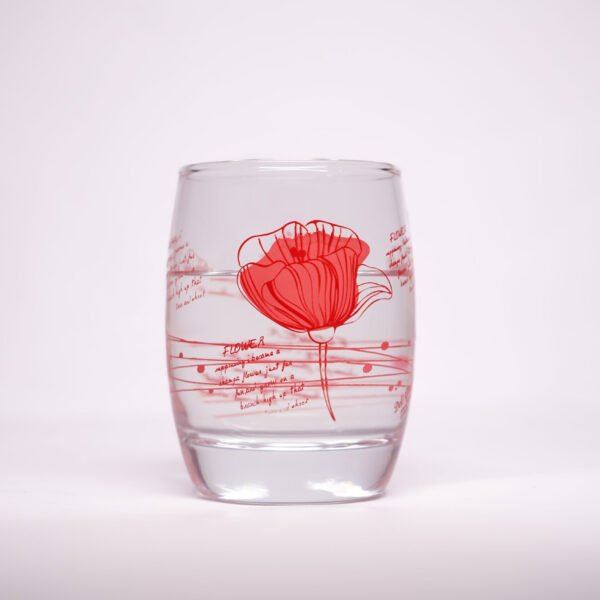
Styled tables, gifting
Modern heavy-base
Thick sham bottom, clean lines
Most durable of the styles here
Bars, lounges, hotels
Stackable
Slight taper, no flare
Saves significant shelf space
Small kitchens, café counters
A trend worth resisting
Heavily textured and coloured glassware has become popular in home-styling content over the past few seasons, and it does look excellent in a photograph. Before ordering it for a business, consider that pattern hides residue, colour batches drift, and neither problem shows up until you are three months in and trying to reorder a match. For commercial use, plain and reorderable beats fashionable almost every time.
Sustainability
Eco-Friendly and Recycled Glassware
Glass is infinitely recyclable without losing quality, and recycled glass – called cullet – is routinely melted back into new production because it lowers the furnace temperature required. Practically, though, the greenest glassware is the piece you keep: a durable glass used for five years outperforms three “eco” glasses replaced annually.
If sustainability is part of the decision, the useful moves are straightforward. Buy thicker, better-finished pieces that survive daily washing rather than replacing thin ones each year. Choose one design you can reorder, so a single breakage does not force replacing a whole set. And switch a disposable habit for a reusable one – a single glass travel mug displaces a few hundred paper cups a year for a daily coffee drinker, which is a larger real-world saving than most product-level claims.
Prioritise durability and reorderability over marketing language
Reuse jars for pantry storage instead of buying new containers
Retire chipped glasses to storage or plant use rather than discarding them
Send broken glass to a glass recycler where local collection allows it – mixed waste streams usually cannot process it
By Setting
Glassware for Kitchens, Dining, Bars, Restaurants, Hotels and Offices
Each setting stresses glassware differently. Order for the stress, not the aesthetic.
Kitchen Glassware
Storage jars and everyday tumblers. Prioritise airtight seals and wide necks. Storage jars →
Dining Glassware
One matched set of six 300 ml tumblers does more for a table than four mismatched designs. Drinking glasses →
Bar Glassware
Rocks and highball glasses with heavy bases and rolled rims. Two shapes cover most menus. Whiskey glasses →
Restaurant Glassware
Tempered where possible, one design per glass type, stackable to save pass-through space. Bulk guide →
Hotel Glassware
A tumbler and rocks glass pair per room covers water and minibar service. Keep a 30% float for housekeeping cycles.
Café Glassware
Highballs for cold coffee and iced tea, borosilicate for anything hot. Both face constant wash cycles. Highball glasses →
Office Pantry
Stackable tumblers for the pantry, sealed travel mugs for desks near keyboards. Travel mugs →
Dessert & Ice Cream Counters
Footed bowls. Presentation does part of the selling before the first spoon. Ice cream bowls →
Gifting
Glassware Gifting Guide
Weddings, housewarmings, Diwali and corporate gifting each have a different right answer.
For an individual gift, a set of two whiskey glasses is the most reliably used glassware gift. For weddings and return gifts, uniform sets of two or six in identical packaging matter more than the design. For corporate gifting, a branded travel mug gets daily use where a decorative piece goes into a cupboard.
Glassware gifting guide by occasion with recommended product, set size and reasoning
For bulk gifting orders
Order 10% above your guest or recipient count. Transit breakage and last-minute additions are both normal, and matching a partial reorder later is harder than it sounds. Private labelling is available on eligible bulk orders – talk to us before finalising quantities.
For Businesses
Buying Glassware in Bulk for Restaurants, Cafés, Bars and Hotels
Commercial buying follows different logic from home buying. Here is what actually decides cost per year.
Standardise on the fewest glass types your menu allows, order two to three times your seated cover count per type, add a 20-25% breakage buffer, and confirm the design is a continuing line before you commit. Specify tempered glass with a rolled or fire-polished rim wherever the glass will be washed more than once a day.
How Many Pieces You Actually Need
The working logic is simple: one set is on tables, one is in the wash, one is on the shelf ready. Two to three times your cover count per glass type covers that rotation. Breakage is not an accident in a busy service – it is a monthly line item, so budget a buffer on top rather than reordering under pressure.
Count seated covers, multiply by 2-3 for each glass type you serve
Add 20-25% as a breakage and downtime buffer
Cut glass types to the minimum – most menus run fine on a tumbler, a rocks glass and a highball
Specify tempered glass and a rolled rim for high-wash-frequency service
Choose stackable shapes if space behind the counter is tight
Confirm the line is continuing, not a one-off lot, before committing
Match cartoning to your transit distance, especially outside metro routes
The mistake that costs the most
Outlets that buy a few glasses at a time end up with three slightly different tumblers on the same table. Guests notice, staff hesitate over which glass goes with which drink, and every reorder becomes a hunt for a match. One design per glass type, held consistently, removes all three problems at once – and it is far easier to set at fit-out than to fix two years later.
Glass is the best material for pantry storage because it is non-porous, does not absorb odour or oil, and lets you see stock levels without opening anything. Match jar size to your refill pack, keep the neck wide enough for a serving spoon, and store away from direct sunlight.
Glass jar storage guide by contents with jar size logic and handling notes
What You’re Storing
Jar Size Logic
Watch For
Pulses, rice, atta
Match to a full 1 kg or 5 kg refill
Wide neck so a scoop fits
Spices
Small jars, refilled often
Keep out of direct sunlight – colour fades
Tea & coffee
Airtight, opaque location
Aroma escapes through a weak seal
Dry snacks, namkeen
Larger jars, wide mouth
Humidity is the enemy – check the gasket
Pickles & oil-based
Dedicated jars
Use a clean dry spoon every time
Fridge leftovers
Jar with a sealing lid
Cool to room temperature before refrigerating
Monsoon note for Indian kitchens
Humidity, not time, is what ruins most stored dry goods here. Before the season, check that every jar gasket still compresses properly – a jar that has lost its seal is worse than no jar at all, because you stop checking the contents. See airtight storage jars →
Avoid These
Common Glassware Buying Mistakes
1
Buying on looks, ignoring capacity
Check the millilitres against what you actually serve before you look at anything else.
2
Using ordinary glass for hot drinks
Soda-lime is not built for sudden heat. Anything for chai or coffee needs borosilicate.
3
Ignoring wash frequency
A delicate glass washed twice a day in a café chips within weeks. Buy for handling, not for day one.
4
Mixing designs across a business
One design per glass type, reordered consistently, keeps every cover looking deliberate.
5
Assuming all glass is the same material
Soda-lime, borosilicate and tempered behave differently under heat and impact. This is the most expensive first-time bulk mistake.
6
Skipping the base check on bar glasses
A rocks glass without a weighted base tips the moment a large cube goes in.
7
Ordering exactly the number needed
Glassware breaks. Ordering the precise count means an urgent reorder within the first month.
8
Ignoring how it will travel
Good glass in bad packing arrives as good glass in pieces. Packing matters as much as the product on non-metro routes.
Myths Worth Ignoring
Common glassware myths and the accurate explanation for each
Myth
What’s Actually True
“Thicker glass never breaks”
Thickness helps against knocks, but uneven thickness makes thermal shock worse.
“All clear glass is crystal”
Crystal is a specific composition with added oxides. Most clear drinking glass is plain soda-lime.
“Cloudy glasses just need better washing”
It is either hard-water film, which vinegar removes, or permanent etching, which nothing removes.
“Borosilicate is unbreakable”
It resists heat, not impact. Drop it and it breaks like any glass.
“Dishwashers ruin glassware”
Water hardness, detergent dose and rinse temperature cause the damage, not the machine itself.
“Tempered glass can be engraved later”
Cutting or drilling after tempering shatters the piece. Customisation happens before tempering.
“Rinsing a hot glass in cold water cools it safely”
That is precisely how thermal shock cracks happen.
Make It Last
Cleaning, Care and Storage
Most glassware does not wear out. It gets damaged by habits that are easy to change.
Washing
Warm water, not hot, with mild detergent and a soft sponge
No steel wool or abrasive scrubbers – the fine scratches permanently dull the surface
Wash glassware before oily cookware, not after, so it does not pick up a greasy film
Line the sink with a cloth so a slipped glass lands on fabric, not steel
In a dishwasher, load so glasses cannot touch, and cut the detergent dose if your water is soft
Drying and Polishing
Air-dry upside down on a folded cloth so water runs out rather than pooling. For a streak-free finish, hold the glass by the base and polish with a lint-free microfibre cloth while it is still slightly warm. Never twist the glass against a fixed hand – that is how rims and stems snap.
Removing Cloudiness
Soak in warm water with white vinegar for around twenty minutes, then wash normally. That lifts hard-water film, the usual culprit across most Indian cities. If the haze survives the soak, it is etching in the glass surface and cannot be reversed.
Storage
Store upright on a lined shelf rather than rim-down on hard laminate
Leave a finger’s gap so removing one glass does not knock the next
Only stack glasses designed to stack – forcing non-stackable tumblers together is the leading cause of home breakage
Keep glassware away from the stove, where repeated heat cycles slowly stress it
Keep bulk cartons sealed until needed, away from sunlight and damp
If two glasses get stuck together
Do not pull. Stand the pair in warm water so the outer glass expands, and pour cold water into the inner glass so it contracts. They separate on their own in under a minute.
Reference
Glassware Terms Explained
The vocabulary you will meet on product listings, in one place.
Glossary of glassware terms with definitions
Term
What It Means
Tumbler
Any flat-based drinking glass with no stem or handle.
Rocks / lowball glass
Short, wide, heavy-based glass for spirits over ice. Sold in India as a whiskey glass.
Highball glass
Tall narrow glass for long drinks with ice and mixer.
Collins glass
Taller and narrower than a highball, for the same purpose.
Pint glass
Tapered beer glass, typically around 500 ml.
Pilsner glass
Tall, slim, slightly flared beer glass that shows carbonation.
Champagne flute
Narrow stemmed glass that preserves bubbles.
Stemware
Any glass with a stem between bowl and foot.
Drinkware
Everything you drink from, glass or otherwise.
Serveware
Items food is presented in, such as dessert bowls and platters.
Tableware
The full category – dinnerware, glassware and cutlery together.
Carafe
Open-topped vessel for serving water or wine at the table.
Decanter
Stoppered vessel for spirits or wine, usually for aeration or display.
Mason jar
Threaded-neck jar with a screw band, originally for home preserving.
Sham
The thick solid glass base of a rocks glass.
Cullet
Recycled glass melted back into new production.
Annealing
Controlled slow cooling that releases internal stress after forming.
Thermal shock
Cracking caused by uneven expansion during a sudden temperature change.
Food-grade
Material safe for food contact that does not alter the food’s composition or safety.
BPA-free
Relevant to plastic lids and components rather than the glass itself.
Fire-polished
Rim reheated after cutting so the edge rounds and resists chipping.
Editorial
Why Trust This Guide
This guide is written by the SILICOX team from Ahmedabad, where we stock and ship glassware to homes, retailers, distributors and hospitality businesses across India. The recommendations here come from what we handle daily – which sizes move, which designs come back as reorders, and which mistakes buyers tell us about after the fact.
How We Select What We Stock
Material fit for purpose – borosilicate where heat is involved, thicker soda-lime or tempered where washing frequency is high
Rim and base finish – we check rim smoothness and base evenness before a line goes into the catalogue, because that is what determines service life
Capacity that matches Indian use – 300 ml tumblers, 250-300 ml rocks glasses, not sizes designed for another market
Reorderability – we prioritise continuing lines so a broken piece can be replaced with an identical one
Packing that survives transit – a line that cannot reach Guwahati intact is not a line we can supply nationally
Who This Guide Is For
Home buyers setting up or restocking a kitchen; home bar owners; and hospitality buyers fitting out restaurants, cafés, bars and hotels. Where a recommendation applies only to one of those groups, we say so.
What We Don’t Claim
We do not present the standards and safety information on this page as a certification. Where a specific product carries documentation, we can share it on request. Where general guidance and a product label disagree, follow the label.
Food-grade glass, inspected for rim finish, base evenness, clarity and chips before it leaves our warehouse.
Packing Built for Indian Transit
A badly packed carton undoes good glass at the first transport hub. Ours is cartoned with breakage in mind.
Private Labelling
Hotels, cafés and resellers can carry their own branding on eligible bulk orders.
Quantity Planning Support
Send your cover count and menu. We will work out sizes and quantities with you instead of leaving you to guess.
Questions & Answers
Frequently Asked Questions
What is glassware?
Glassware refers to drinking, serving and storage products made from glass – tumblers, whisky and highball glasses, dessert bowls, jars, mugs and barware. Different types are designed for specific beverages, temperatures and serving styles.
What is the standard size of a water glass in India?
Between 250 ml and 350 ml, with 300 ml the most common size on home dining tables and restaurant covers.
Which glass is best for daily use at home?
A 300 ml soda-lime tumbler with a thick base and a fire-polished rim. It handles water, juice, chaas and soft drinks, stacks easily and survives daily washing.
What size whisky glass should I buy?
250-300 ml. That holds a standard pour plus large ice cubes without the glass looking oversized.
What is the difference between a highball glass and a tumbler?
A tumbler is short and wide for everyday water and juice. A highball is tall and narrow for long drinks with ice and mixer, which it holds without overflowing.
Is a whiskey glass the same as a rocks glass?
In everyday Indian retail, yes. Rocks glass and lowball both describe a short, wide, heavy-based glass, which is sold here as a whiskey glass. A narrow-topped tasting glass is a separate specialised item.
Is borosilicate better than tempered glass?
They solve different problems. Borosilicate resists heat, tempered resists impact and chipping. Choose borosilicate for hot drinks and tempered for high-volume commercial washing.
Are glass travel mugs safe for hot tea and coffee?
Only if the body is borosilicate. Ordinary glass can crack under sudden heat, while borosilicate is made to take hot liquid safely.
Is glassware dishwasher safe?
Plain soda-lime, borosilicate and tempered glassware are dishwasher safe on a standard cycle. Painted, decorated or metal-trimmed pieces should be hand washed.
Can glassware go in the microwave?
Borosilicate is the safest choice. Soda-lime and tempered glass handle short reheating but not sharp temperature swings. Anything with gold or silver trim must never go in.
Why do glasses crack when hot water is poured in?
Thermal shock. One part of the glass expands faster than the rest and the stress splits it. Borosilicate expands far less, which is why it survives the same pour.
How do I remove cloudiness from old glasses?
Soak in warm water with white vinegar for about twenty minutes, then wash normally. That clears hard-water film. Cloudiness that survives the soak is etching and cannot be reversed.
Why do some glasses chip faster than others?
Thin cut rims chip fastest. A fire-polished or rolled rim with a thicker base lasts noticeably longer under daily handling and washing.
Is glassware lead-free?
Plain soda-lime and borosilicate drinking glass contains no added lead. Lead is a consideration only with traditional lead crystal, which is why lead-free crystalline alternatives exist.
Which BIS standard covers glass tableware in India?
IS 1961, the Bureau of Indian Standards specification for glass tableware. For tableware it is a voluntary standard, so an ISI mark is optional unless a specific Quality Control Order applies.
Does FSSAI regulate glassware?
Under the FSS (Packaging) Regulations, 2018, glass in contact with food must be free from stones, cords, sharp edges, chipping, cracks, mould marks, blisters, pinholes and other visible defects. A draft amendment issued in February 2026 would explicitly bring kitchenware and tableware into the food contact material definition.
How do I check glassware quality before buying?
Run a finger round the rim for smoothness, hold the base to light and look for stress marks, check for trapped bubbles, and stand six on a flat surface to confirm none of them rock.
How many glasses should a restaurant order?
Two to three times your seated cover count per glass type, plus a 20-25% breakage buffer. One set is in use, one is being washed, one is on the shelf.
Which glassware is best for a café or restaurant?
Tempered glass with a rolled or fire-polished rim and a thick base, standardised to one design per glass type so replacements always match.
Is glass more eco-friendly than plastic?
Glass is infinitely recyclable without quality loss, which plastic is not. The bigger real-world saving comes from durability – one glass kept for five years beats several replaced annually.
What is the best glassware gift?
A set of two whiskey glasses for an individual, a set of six for a wedding or housewarming, and a branded travel mug for corporate gifting, since it gets daily desk use.
Do you supply glassware in bulk for hotels and cafés?
Yes. We supply bulk glassware to hotels, restaurants, cafés and bars, with volume pricing and packing built for long-distance transit.
Do you offer custom branding on glassware?
Yes, private labelling is available on eligible bulk orders, which suits hotels, cafés and resellers who want their own branding on the glass.
Do you deliver glassware across India?
Yes. We ship individual sets and bulk commercial orders across India, packed to resist breakage in transit.
Need Help Choosing?
Tell us what you are serving and how many people you are serving it to. We will tell you which sizes and shapes to order – whether that is one set for a dining table or two hundred pieces for a new outlet.
₹349.00–₹778.00Price range: ₹349.00 through ₹778.00
Select options
This product has multiple variants. The options may be chosen on the product page
Glassware
Glassware for Indian Homes, Cafés, Restaurants & Hotels
Six glassware collections, stocked as sets for homes and in volume for hospitality businesses – drinking glasses, whiskey glasses, highball glasses, dessert bowls, storage jars and borosilicate travel mugs. Below each collection you will find the size, material and shape guidance we normally give buyers over the phone, so you can order correctly the first time.
Most glassware regret comes from three decisions made too quickly: the wrong capacity, the wrong material for the temperature, and a rim that was never built for daily washing. This page fixes all three before you add anything to the cart.
If you are buying for a home, start with the Best Glassware For… section. If you are buying for a business, skip to Bulk Buying – quantities, standardisation and the BIS and FSSAI points that matter to a hospitality buyer are covered there.
Most-ordered sizes across our range: 300 ml tumblers, 250-300 ml whiskey glasses and 300-350 ml highball glasses. If you are unsure, those three cover almost every situation.
The Range
SILICOX Glassware Collections
Six collections covering drinkware, barware, serveware and storage – in retail sets and bulk quantities.
If you are buying one thing from this page, buy these. A 300 ml tumbler is the workhorse of an Indian kitchen – water, juice, chaas, nimbu pani, soft drinks. Our drinking glass collection uses food-grade soda-lime glass with a deliberately thicker base, because the base is where a tumbler actually takes damage: set down hard on granite, stacked, knocked against a steel sink. Thin-based tumblers photograph beautifully and start chipping within weeks of real use.
Whiskey Glasses (Rocks / Lowball)
A whiskey glass – also called a rocks glass or lowball – is not a shorter tumbler. It needs a wide mouth so aroma can open up, and a heavy base so the glass stays planted when a large ice cube goes in. Ours sit in the 250-300 ml range, which holds a standard pour plus ice without looking oversized. Sets of two suit gifting, sets of six suit a home bar, and bulk quantities suit lounges that need every table to match. See the whiskey glass range →
Highball Glasses (Collins Style)
Tall and narrow, the highball – close cousin of the Collins glass – is what you want for anything served long over ice: mojitos, iced tea, cold coffee, jal jeera, virgin mixes. Height gives ice and garnish room to sit, and the narrow body keeps carbonation from going flat as quickly. Building a home bar? Pair these with whiskey glasses and you have covered roughly ninety percent of what you will ever serve. Browse highball glasses →
Ice Cream Bowls & Dessert Serveware
Plastic dulls, steel hides the dessert, glass does neither. Smaller bowls suit a plain two-scoop serving; footed sundae bowls give height and room for sauce, dry fruit and wafer. For a dessert counter, visibility does a measurable part of the selling before the customer tastes anything. Shop ice cream bowls →
Glass Storage Jars
Airtight lids keep contents dry through a Gujarat monsoon, and transparency means you can see what is running low without opening six containers. Wide necks matter more than buyers expect – a jar a serving spoon will not fit into becomes the jar nobody uses. View glass storage jars →
Glass Travel Mugs
Borosilicate body, so hot chai poured straight in is not a risk. Silicone sleeve for grip, sealing lid for the commute. People switch to glass here for one reason: tea and coffee in glass taste like tea and coffee, with none of the plastic aftertaste that creeps into cheaper mugs after a few months. Shop glass travel mugs →
Decide Fast
Best Glassware For…
Find your situation, get a specific order list. No browsing required.
Recommended glassware order lists for different household, hospitality and gifting situations
From handling these orders
First-time home buyers almost always over-buy on variety and under-buy on quantity – four different shapes, four pieces each. Six months later they own one full set and three orphans. Buy six of one design before you buy two of three designs.
The Basics
What Is Glassware?
Glassware refers to drinking, serving and storage products made from glass – including tumblers, water glasses, juice glasses, whisky and rocks glasses, highball and Collins glasses, wine glasses, beer mugs, dessert bowls, carafes, storage jars and travel mugs. Different types are shaped for specific beverages, temperatures and serving styles, and the material differs by intended use: soda-lime for cold drinks, borosilicate for hot, tempered for high-volume commercial service.
Glassware sits inside the broader tableware family alongside dinnerware and cutlery, and overlaps with two narrower terms you will see on product listings: drinkware, meaning anything you drink from, and serveware, meaning anything food is presented in. A dessert bowl is serveware. A tumbler is drinkware. Both are glassware.
The reason glass has never been displaced by steel or plastic comes down to one property: it is non-porous. Nothing soaks into the surface. It does not hold yesterday’s masala, does not stain from turmeric or coffee, and adds no flavour of its own. That single property is why a banquet hall and a two-person kitchen both reach for glass when hygiene and presentation matter – and it is why food-grade glass remains the default across the Indian hospitality industry.
Glassware families with examples, defining traits and matching SILICOX collections
Family
Includes
Defining Trait
Shop
Drinkware
Tumblers, water glasses, juice glasses
No stem, flat base, walls built for daily handling
Shape is not decoration. It controls aroma, temperature, carbonation and how much you actually pour.
Short and wide for spirits you want to smell. Tall and narrow for anything with ice, mixer or fizz. Stemmed for anything that must stay cool in your hand. Heat-resistant borosilicate for anything served hot. Once you know which of those four situations you are in, the glass chooses itself.
Guide matching each drink or dessert to the correct glass type, capacity, reason and where to buy
Drink / Use
Glass
Capacity
Why That Shape
Shop
Daily water
Tumbler
250-350 ml
Straight sides pour cleanly and stack in a cabinet
The sizing mistake almost everyone makes
A glass that is too large makes a normal pour look mean. A glass that is too small means constant refilling. Match capacity to the serving first, then pick the design.
Material Guide
Which Glass Material Should You Buy?
Four material names appear on nearly every listing. Each one changes how the glass behaves in your kitchen.
Soda-Lime Glass – the right default for home use
If you are buying glassware for daily home use, soda-lime glass gives the best balance of durability, clarity and price. It is the standard composition for tableware worldwide, and most of our drinking glasses, juice glasses and whiskey glasses use food-grade soda-lime because it simply performs well for cold and room-temperature service. Its one real limitation is heat: it expands enough under a sudden temperature change to crack, so it is the wrong choice for boiling liquid.
Borosilicate Glass – buy this if hot liquid is involved
Borosilicate contains boron trioxide, which cuts thermal expansion dramatically. That is the whole reason it survives hot chai poured straight in while an ordinary glass splits. If you want a mug for tea or coffee, buy borosilicate and do not compromise – a thicker ordinary glass is not a substitute. Our glass travel mugs use borosilicate for exactly this reason.
Tempered Glass – for anything washed several times a day
Tempering heats finished glass and cools its surface rapidly, locking the outer layer into compression. The result resists chips and impact far better than annealed glass, and if it does fail it crumbles into small blunt granules rather than sharp shards – which matters on a service floor. This is the specification to ask for when fitting out a restaurant, café or bar.
Crystal and Lead-Free Crystalline – presentation pieces
Traditional lead crystal adds lead oxide for weight and light dispersion. The health question concerns long contact – spirits stored in a lead crystal decanter for months, not a drink poured and finished in an hour. Modern lead-free crystalline replaces lead oxide with barium, zinc or potassium oxide and reaches similar brilliance without that question. Plain soda-lime and borosilicate drinking glass contains no added lead in the first place.
Soda-lime, borosilicate, tempered and crystal glass compared on thermal shock, impact resistance, break pattern and best use
Property
Soda-Lime
Borosilicate
Tempered
Crystal / Crystalline
Thermal shock
Low
High
Moderate
Low
Chip & impact resistance
Standard
Standard to good
Highest
Low – thin walls chip easily
If it breaks
Sharp shards
Sharp shards
Blunt granules – safer failure
Sharp shards
Clarity & weight
Clear, medium weight
Very clear, light
Clear, heavier
Highest brilliance, heavy
Relative cost
Lowest
Moderate
Moderate to high
Highest
Buy it for
Everyday home drinkware
Hot drinks, temperature swings
Restaurants, cafés, bars, hotels
Display and premium gifting
About lids and BPA
The glass body is never the BPA question – lids are. If a travel mug or jar has a plastic lid, check that it is food-grade and BPA-free, since that is the component actually in contact with hot liquid and steam.
Head to Head
Glassware Comparisons
The six comparisons buyers actually search before ordering.
Highball vs Tumbler
A tumbler is short and wide for everyday water and juice. A highball is tall and narrow for long drinks with ice and mixer. If ice and a mixer are involved, buy the highball.
Highball glass compared with tumbler on shape, capacity, ice capacity and typical use
In everyday Indian retail these are the same product. “Rocks glass” and “lowball” describe a short, wide, heavy-based glass; “whiskey glass” is the common shopping term for it. A true tasting glass – narrow-topped and tulip-shaped – is a separate, more specialised item.
Whiskey glass, rocks glass and tasting glass compared
Borosilicate resists heat. Tempered resists impact. They solve different problems, so the question is which failure you are trying to prevent – cracking from hot liquid, or chipping from constant handling.
Borosilicate glass compared with tempered glass on heat resistance, impact resistance and best use
Factor
Borosilicate
Tempered
Made by
Different chemical composition
Heat treatment after forming
Heat resistance
Excellent
Moderate
Impact resistance
Standard
Highest
Break pattern
Sharp shards
Blunt granules
Buy for
Tea, coffee, hot serving
High-volume washing and handling
Glass vs Ceramic
Glass shows the drink and never absorbs flavour. Ceramic holds heat longer and hides everything inside. For cold drinks and presentation, glass wins. For a mug that keeps coffee warm at a desk, ceramic has an edge – unless you want to see the drink, in which case borosilicate closes the gap.
Glass compared with ceramic drinkware on visibility, heat retention, weight, chipping and cost
Factor
Glass
Ceramic
Visibility
Full – shows layers and colour
Opaque
Heat retention
Lower
Higher
Weight
Lighter
Heavier
Chipping
Chips at the rim
Glaze chips and can flake
Best for
Cold drinks, desserts, presentation
Hot beverages at rest
Glass vs Stainless Steel
Steel is effectively unbreakable and better for travel and outdoor use. Glass is neutral in taste, easier to see into and easier to verify as clean. For dining and service, glass. For a trek or a school bag, steel.
Glass compared with stainless steel drinkware on taste, durability, presentation and hygiene checking
Factor
Glass
Stainless Steel
Taste
Completely neutral
Faint metallic note with acidic drinks
Durability
Breaks on hard impact
Survives drops and dents
Presentation
Shows the drink
Opaque
Checking cleanliness
Visible at a glance
Hard to inspect inside
Best for
Dining, service, desserts
Travel, outdoors, rough handling
Clear Glass vs Coloured Glass
Clear glass is the safer commercial choice because it shows the drink and hides nothing about cleanliness. Coloured glass adds character to a table setting but makes it harder to spot residue and harder to reorder an exact match later.
Clear glass compared with coloured glass on presentation, cleanliness checking, reordering and best use
Factor
Clear
Coloured
Shows the drink
Yes
Partially or not at all
Spotting residue
Easy
Harder
Matching a reorder
Straightforward
Shade can vary between batches
Best for
Restaurants, cafés, everyday use
Styled home tables, gifting
Machine-Made vs Handmade
Machine-made glassware is consistent and reorderable, which is exactly what a home set or a business needs. Handmade glassware varies piece to piece and suits gifting or display, where the variation is the point.
Machine-made versus handmade glassware compared on consistency, seam, wall thickness and replaceability
Factor
Machine-Made
Handmade
Consistency
Identical across the batch
Varies piece to piece
Mould seam
Faint seam usually visible
None
Wall thickness
Even, generally thicker
Thinner, slightly uneven
Replacing a broken piece
Reorder the same SKU
Rarely an exact match
Best for
Homes, restaurants, hotels, bulk
Gifting, display, collector pieces
Glass forming itself is the same in both cases at the start – silica sand, soda ash and limestone melted together. Machine production drops molten gobs into moulds and presses or blows them at speed, then anneals the pieces in a controlled cooling tunnel to release internal stress. That annealing step is not optional; glass cooled too fast holds stress and fails later for no visible reason.
Reference
Glassware Size Chart for India
Standard capacities across Indian homes and hospitality, with what to order for each.
Standard Indian glassware capacity chart with what each size is built for and where to buy
Listed capacity is usually brim-full volume. Practical serving volume runs roughly 15-20% lower once you leave headroom for ice and pouring.
Build Quality
Rim, Base and Thickness: What Decides How Long a Glass Lasts
Two glasses can look identical in a product photo and behave completely differently after three months. The difference is almost always here.
The rim decides how soon a glass chips. The base decides whether it tips or cracks. Wall thickness decides how it feels to drink from. For daily home use or any commercial setting, prioritise a fire-polished or rolled rim over a thin cut rim, and a thick base over a light one.
What we see in reorders
Across the bulk orders we handle, the most common reason a restaurant replaces glassware is not a dropped glass – it is a chipped rim. Thin-rim tumblers get retired long before the body ever fails, because a chipped rim cannot be served from. That is why heavier commercial-grade designs usually work out cheaper per year of service even though they cost more per piece.
Rim Types
Cut, fire-polished and rolled glass rims compared on finishing, chip resistance and best use
Rim
How It’s Finished
Chip Resistance
Best For
Cut (cold) rim
Cut and ground flat, leaving a thin sharp edge
Lowest
Occasional-use fine pieces
Fire-polished rim
Reheated so the edge softens and rounds
Good
Most quality home drinkware
Rolled / beaded rim
Edge rolled outward into a thicker bead
Highest
Cafés, canteens, banquet halls
Run a finger lightly around the rim of any glass you are evaluating. A good rim feels smooth and slightly rounded. A rim that feels sharp or catches on skin will chip.
Base Types
Flat base – the standard tumbler foot. Stable, stackable, easy to store.
Heavy or weighted base – a thick slab of glass at the bottom, used on rocks glasses. Lowers the centre of gravity so the glass does not tip when ice goes in.
Footed base – a short pedestal, common on sundae and dessert bowls. Lifts the serving and reads as more premium.
Stemmed base – a full stem for wine, keeping hand warmth away from the drink.
Wall and Base Thickness
Thin, medium and thick-walled glassware compared on feel, durability and recommended setting
Build
Feel
Durability
Recommended For
Thin-walled
Light, refined on the lip
Chips earliest
Occasional use, display, gifting
Medium-walled
Balanced weight
Handles normal home use well
Everyday household drinkware
Thick-walled, heavy base
Solid, noticeably weighty
Best resistance to chips and knocks
Bars, cafés, restaurants, hotels
Thicker is not automatically safer with heat
Uneven thickness makes thermal shock worse, because one part of the wall expands faster than another. For hot drinks, choose borosilicate – not simply a heavier ordinary glass.
Standards
Glassware Quality Grades, BIS and FSSAI in India
What “food-grade” actually means here, and which Indian standards apply to glass tableware.
Glass tableware in India is covered by IS 1961, the Bureau of Indian Standards specification for glass tableware. It is a voluntary standard for tableware – an ISI mark is optional unless a specific Quality Control Order applies to that product. Separately, under the FSS (Packaging) Regulations, 2018, glass that contacts food must be free from stones, cords, seeds, sharp edges, chipping, cracks, mould marks, blisters, pinholes and other visible defects. In February 2026 FSSAI issued a draft amendment that explicitly brings kitchenware and tableware into the definition of food contact material.
For a home buyer this mostly translates into what you can check with your own eyes. For a hospitality buyer it matters more, because your FSSAI-licensed kitchen is accountable for what your food and drink touches. The February 2026 draft amendment is worth watching if you supply or operate a food business – it moves tableware from an implied requirement to a defined one.
How to Judge Glassware Quality Without a Lab
Rim – run a finger round it. Smooth and rounded is good; sharp or catching is not.
Base – hold it to light and look for stress marks, waves or an off-centre thickness.
Clarity – a faint green or grey cast usually indicates higher iron content in the batch. Not unsafe, but it reads cheaper on a table.
Bubbles and seeds – small trapped bubbles are a forming defect and become weak points.
Mould seam – a faint seam is normal on machine-made glass. A raised, rough seam is poor finishing.
Ring test – tap the rim gently. A clean tone suggests even, unstressed glass; a dull thud can indicate a flaw.
Stand test – place six on a flat surface. All six should sit without rocking. Rocking means an uneven base and a shorter life.
Before a large order
Ask for a sample piece and run these seven checks yourself, then put it through one real wash cycle in your own kitchen. Twenty minutes of checking prevents a wrong order of two hundred pieces.
Standards information above is general guidance, not a compliance certification. For any specific product’s conformity status, ask us directly and we will share what documentation is available for that line.
Safety
Dishwasher, Microwave, Freezer and Oven Safety
The most common cause of broken glassware in Indian kitchens is not dropping. It is temperature.
Plain soda-lime, borosilicate and tempered glassware are all dishwasher safe. Only borosilicate is genuinely comfortable with hot liquid and repeated microwave use. Nothing with metallic trim goes in a microwave. Nothing moves from freezer to hot water directly.
Glassware safety chart showing dishwasher, microwave, freezer and oven suitability by glass type
Glass Type
Dishwasher
Microwave
Freezer
Oven
Soda-lime
Yes
Short reheating only
Yes, warm back slowly
No
Borosilicate
Yes
Yes
Yes
Only if labelled oven-safe
Tempered
Yes – toughest here
Usually yes, avoid swings
Yes, gradual warming
No
Painted / decorated
Hand wash preferred
Only if no metallic content
Yes
No
Metallic / gold rim
Hand wash only
Never
Yes
No
Always follow the specific product label where it differs from this general chart.
The thermal shock rule
Never pour boiling liquid into a cold glass, never put a hot glass under a cold tap, and never move a glass straight from the freezer into warm water. Let glass change temperature gradually and it will outlast you.
Style Guide
Glassware Design Styles
Once material and capacity are settled, style is what is left. Here is what each one does on a table.
Glassware design styles compared on look, practical effect and best setting
Style
Look
Practical Effect
Best Setting
Minimalist / plain
Straight sides, no pattern
Easiest to reorder and match; cleans fastest
Restaurants, cafés, everyday home
Ribbed / fluted
Vertical ridges catching light
Better grip when wet; ridges need a proper wash
Cafés, styled home tables
Hobnail / textured
Raised dots or facets
Strong grip; hides minor water marks
Bars, home entertaining
Vintage / etched
Cut or etched patterning
Slower to clean; pattern hides residue
Display, gifting, occasional use
Coloured / tinted
Amber, blue, smoke, green
Shade can vary between production batches
Styled tables, gifting
Modern heavy-base
Thick sham bottom, clean lines
Most durable of the styles here
Bars, lounges, hotels
Stackable
Slight taper, no flare
Saves significant shelf space
Small kitchens, café counters
A trend worth resisting
Heavily textured and coloured glassware has become popular in home-styling content over the past few seasons, and it does look excellent in a photograph. Before ordering it for a business, consider that pattern hides residue, colour batches drift, and neither problem shows up until you are three months in and trying to reorder a match. For commercial use, plain and reorderable beats fashionable almost every time.
Sustainability
Eco-Friendly and Recycled Glassware
Glass is infinitely recyclable without losing quality, and recycled glass – called cullet – is routinely melted back into new production because it lowers the furnace temperature required. Practically, though, the greenest glassware is the piece you keep: a durable glass used for five years outperforms three “eco” glasses replaced annually.
If sustainability is part of the decision, the useful moves are straightforward. Buy thicker, better-finished pieces that survive daily washing rather than replacing thin ones each year. Choose one design you can reorder, so a single breakage does not force replacing a whole set. And switch a disposable habit for a reusable one – a single glass travel mug displaces a few hundred paper cups a year for a daily coffee drinker, which is a larger real-world saving than most product-level claims.
Prioritise durability and reorderability over marketing language
Reuse jars for pantry storage instead of buying new containers
Retire chipped glasses to storage or plant use rather than discarding them
Send broken glass to a glass recycler where local collection allows it – mixed waste streams usually cannot process it
By Setting
Glassware for Kitchens, Dining, Bars, Restaurants, Hotels and Offices
Each setting stresses glassware differently. Order for the stress, not the aesthetic.
Kitchen Glassware
Storage jars and everyday tumblers. Prioritise airtight seals and wide necks. Storage jars →
Dining Glassware
One matched set of six 300 ml tumblers does more for a table than four mismatched designs. Drinking glasses →
Bar Glassware
Rocks and highball glasses with heavy bases and rolled rims. Two shapes cover most menus. Whiskey glasses →
Restaurant Glassware
Tempered where possible, one design per glass type, stackable to save pass-through space. Bulk guide →
Hotel Glassware
A tumbler and rocks glass pair per room covers water and minibar service. Keep a 30% float for housekeeping cycles.
Café Glassware
Highballs for cold coffee and iced tea, borosilicate for anything hot. Both face constant wash cycles. Highball glasses →
Office Pantry
Stackable tumblers for the pantry, sealed travel mugs for desks near keyboards. Travel mugs →
Dessert & Ice Cream Counters
Footed bowls. Presentation does part of the selling before the first spoon. Ice cream bowls →
Gifting
Glassware Gifting Guide
Weddings, housewarmings, Diwali and corporate gifting each have a different right answer.
For an individual gift, a set of two whiskey glasses is the most reliably used glassware gift. For weddings and return gifts, uniform sets of two or six in identical packaging matter more than the design. For corporate gifting, a branded travel mug gets daily use where a decorative piece goes into a cupboard.
Glassware gifting guide by occasion with recommended product, set size and reasoning
For bulk gifting orders
Order 10% above your guest or recipient count. Transit breakage and last-minute additions are both normal, and matching a partial reorder later is harder than it sounds. Private labelling is available on eligible bulk orders – talk to us before finalising quantities.
For Businesses
Buying Glassware in Bulk for Restaurants, Cafés, Bars and Hotels
Commercial buying follows different logic from home buying. Here is what actually decides cost per year.
Standardise on the fewest glass types your menu allows, order two to three times your seated cover count per type, add a 20-25% breakage buffer, and confirm the design is a continuing line before you commit. Specify tempered glass with a rolled or fire-polished rim wherever the glass will be washed more than once a day.
How Many Pieces You Actually Need
The working logic is simple: one set is on tables, one is in the wash, one is on the shelf ready. Two to three times your cover count per glass type covers that rotation. Breakage is not an accident in a busy service – it is a monthly line item, so budget a buffer on top rather than reordering under pressure.
Count seated covers, multiply by 2-3 for each glass type you serve
Add 20-25% as a breakage and downtime buffer
Cut glass types to the minimum – most menus run fine on a tumbler, a rocks glass and a highball
Specify tempered glass and a rolled rim for high-wash-frequency service
Choose stackable shapes if space behind the counter is tight
Confirm the line is continuing, not a one-off lot, before committing
Match cartoning to your transit distance, especially outside metro routes
The mistake that costs the most
Outlets that buy a few glasses at a time end up with three slightly different tumblers on the same table. Guests notice, staff hesitate over which glass goes with which drink, and every reorder becomes a hunt for a match. One design per glass type, held consistently, removes all three problems at once – and it is far easier to set at fit-out than to fix two years later.
Glass is the best material for pantry storage because it is non-porous, does not absorb odour or oil, and lets you see stock levels without opening anything. Match jar size to your refill pack, keep the neck wide enough for a serving spoon, and store away from direct sunlight.
Glass jar storage guide by contents with jar size logic and handling notes
What You’re Storing
Jar Size Logic
Watch For
Pulses, rice, atta
Match to a full 1 kg or 5 kg refill
Wide neck so a scoop fits
Spices
Small jars, refilled often
Keep out of direct sunlight – colour fades
Tea & coffee
Airtight, opaque location
Aroma escapes through a weak seal
Dry snacks, namkeen
Larger jars, wide mouth
Humidity is the enemy – check the gasket
Pickles & oil-based
Dedicated jars
Use a clean dry spoon every time
Fridge leftovers
Jar with a sealing lid
Cool to room temperature before refrigerating
Monsoon note for Indian kitchens
Humidity, not time, is what ruins most stored dry goods here. Before the season, check that every jar gasket still compresses properly – a jar that has lost its seal is worse than no jar at all, because you stop checking the contents. See airtight storage jars →
Avoid These
Common Glassware Buying Mistakes
1
Buying on looks, ignoring capacity
Check the millilitres against what you actually serve before you look at anything else.
2
Using ordinary glass for hot drinks
Soda-lime is not built for sudden heat. Anything for chai or coffee needs borosilicate.
3
Ignoring wash frequency
A delicate glass washed twice a day in a café chips within weeks. Buy for handling, not for day one.
4
Mixing designs across a business
One design per glass type, reordered consistently, keeps every cover looking deliberate.
5
Assuming all glass is the same material
Soda-lime, borosilicate and tempered behave differently under heat and impact. This is the most expensive first-time bulk mistake.
6
Skipping the base check on bar glasses
A rocks glass without a weighted base tips the moment a large cube goes in.
7
Ordering exactly the number needed
Glassware breaks. Ordering the precise count means an urgent reorder within the first month.
8
Ignoring how it will travel
Good glass in bad packing arrives as good glass in pieces. Packing matters as much as the product on non-metro routes.
Myths Worth Ignoring
Common glassware myths and the accurate explanation for each
Myth
What’s Actually True
“Thicker glass never breaks”
Thickness helps against knocks, but uneven thickness makes thermal shock worse.
“All clear glass is crystal”
Crystal is a specific composition with added oxides. Most clear drinking glass is plain soda-lime.
“Cloudy glasses just need better washing”
It is either hard-water film, which vinegar removes, or permanent etching, which nothing removes.
“Borosilicate is unbreakable”
It resists heat, not impact. Drop it and it breaks like any glass.
“Dishwashers ruin glassware”
Water hardness, detergent dose and rinse temperature cause the damage, not the machine itself.
“Tempered glass can be engraved later”
Cutting or drilling after tempering shatters the piece. Customisation happens before tempering.
“Rinsing a hot glass in cold water cools it safely”
That is precisely how thermal shock cracks happen.
Make It Last
Cleaning, Care and Storage
Most glassware does not wear out. It gets damaged by habits that are easy to change.
Washing
Warm water, not hot, with mild detergent and a soft sponge
No steel wool or abrasive scrubbers – the fine scratches permanently dull the surface
Wash glassware before oily cookware, not after, so it does not pick up a greasy film
Line the sink with a cloth so a slipped glass lands on fabric, not steel
In a dishwasher, load so glasses cannot touch, and cut the detergent dose if your water is soft
Drying and Polishing
Air-dry upside down on a folded cloth so water runs out rather than pooling. For a streak-free finish, hold the glass by the base and polish with a lint-free microfibre cloth while it is still slightly warm. Never twist the glass against a fixed hand – that is how rims and stems snap.
Removing Cloudiness
Soak in warm water with white vinegar for around twenty minutes, then wash normally. That lifts hard-water film, the usual culprit across most Indian cities. If the haze survives the soak, it is etching in the glass surface and cannot be reversed.
Storage
Store upright on a lined shelf rather than rim-down on hard laminate
Leave a finger’s gap so removing one glass does not knock the next
Only stack glasses designed to stack – forcing non-stackable tumblers together is the leading cause of home breakage
Keep glassware away from the stove, where repeated heat cycles slowly stress it
Keep bulk cartons sealed until needed, away from sunlight and damp
If two glasses get stuck together
Do not pull. Stand the pair in warm water so the outer glass expands, and pour cold water into the inner glass so it contracts. They separate on their own in under a minute.
Reference
Glassware Terms Explained
The vocabulary you will meet on product listings, in one place.
Glossary of glassware terms with definitions
Term
What It Means
Tumbler
Any flat-based drinking glass with no stem or handle.
Rocks / lowball glass
Short, wide, heavy-based glass for spirits over ice. Sold in India as a whiskey glass.
Highball glass
Tall narrow glass for long drinks with ice and mixer.
Collins glass
Taller and narrower than a highball, for the same purpose.
Pint glass
Tapered beer glass, typically around 500 ml.
Pilsner glass
Tall, slim, slightly flared beer glass that shows carbonation.
Champagne flute
Narrow stemmed glass that preserves bubbles.
Stemware
Any glass with a stem between bowl and foot.
Drinkware
Everything you drink from, glass or otherwise.
Serveware
Items food is presented in, such as dessert bowls and platters.
Tableware
The full category – dinnerware, glassware and cutlery together.
Carafe
Open-topped vessel for serving water or wine at the table.
Decanter
Stoppered vessel for spirits or wine, usually for aeration or display.
Mason jar
Threaded-neck jar with a screw band, originally for home preserving.
Sham
The thick solid glass base of a rocks glass.
Cullet
Recycled glass melted back into new production.
Annealing
Controlled slow cooling that releases internal stress after forming.
Thermal shock
Cracking caused by uneven expansion during a sudden temperature change.
Food-grade
Material safe for food contact that does not alter the food’s composition or safety.
BPA-free
Relevant to plastic lids and components rather than the glass itself.
Fire-polished
Rim reheated after cutting so the edge rounds and resists chipping.
Editorial
Why Trust This Guide
This guide is written by the SILICOX team from Ahmedabad, where we stock and ship glassware to homes, retailers, distributors and hospitality businesses across India. The recommendations here come from what we handle daily – which sizes move, which designs come back as reorders, and which mistakes buyers tell us about after the fact.
How We Select What We Stock
Material fit for purpose – borosilicate where heat is involved, thicker soda-lime or tempered where washing frequency is high
Rim and base finish – we check rim smoothness and base evenness before a line goes into the catalogue, because that is what determines service life
Capacity that matches Indian use – 300 ml tumblers, 250-300 ml rocks glasses, not sizes designed for another market
Reorderability – we prioritise continuing lines so a broken piece can be replaced with an identical one
Packing that survives transit – a line that cannot reach Guwahati intact is not a line we can supply nationally
Who This Guide Is For
Home buyers setting up or restocking a kitchen; home bar owners; and hospitality buyers fitting out restaurants, cafés, bars and hotels. Where a recommendation applies only to one of those groups, we say so.
What We Don’t Claim
We do not present the standards and safety information on this page as a certification. Where a specific product carries documentation, we can share it on request. Where general guidance and a product label disagree, follow the label.
Food-grade glass, inspected for rim finish, base evenness, clarity and chips before it leaves our warehouse.
Packing Built for Indian Transit
A badly packed carton undoes good glass at the first transport hub. Ours is cartoned with breakage in mind.
Private Labelling
Hotels, cafés and resellers can carry their own branding on eligible bulk orders.
Quantity Planning Support
Send your cover count and menu. We will work out sizes and quantities with you instead of leaving you to guess.
Questions & Answers
Frequently Asked Questions
What is glassware?
Glassware refers to drinking, serving and storage products made from glass – tumblers, whisky and highball glasses, dessert bowls, jars, mugs and barware. Different types are designed for specific beverages, temperatures and serving styles.
What is the standard size of a water glass in India?
Between 250 ml and 350 ml, with 300 ml the most common size on home dining tables and restaurant covers.
Which glass is best for daily use at home?
A 300 ml soda-lime tumbler with a thick base and a fire-polished rim. It handles water, juice, chaas and soft drinks, stacks easily and survives daily washing.
What size whisky glass should I buy?
250-300 ml. That holds a standard pour plus large ice cubes without the glass looking oversized.
What is the difference between a highball glass and a tumbler?
A tumbler is short and wide for everyday water and juice. A highball is tall and narrow for long drinks with ice and mixer, which it holds without overflowing.
Is a whiskey glass the same as a rocks glass?
In everyday Indian retail, yes. Rocks glass and lowball both describe a short, wide, heavy-based glass, which is sold here as a whiskey glass. A narrow-topped tasting glass is a separate specialised item.
Is borosilicate better than tempered glass?
They solve different problems. Borosilicate resists heat, tempered resists impact and chipping. Choose borosilicate for hot drinks and tempered for high-volume commercial washing.
Are glass travel mugs safe for hot tea and coffee?
Only if the body is borosilicate. Ordinary glass can crack under sudden heat, while borosilicate is made to take hot liquid safely.
Is glassware dishwasher safe?
Plain soda-lime, borosilicate and tempered glassware are dishwasher safe on a standard cycle. Painted, decorated or metal-trimmed pieces should be hand washed.
Can glassware go in the microwave?
Borosilicate is the safest choice. Soda-lime and tempered glass handle short reheating but not sharp temperature swings. Anything with gold or silver trim must never go in.
Why do glasses crack when hot water is poured in?
Thermal shock. One part of the glass expands faster than the rest and the stress splits it. Borosilicate expands far less, which is why it survives the same pour.
How do I remove cloudiness from old glasses?
Soak in warm water with white vinegar for about twenty minutes, then wash normally. That clears hard-water film. Cloudiness that survives the soak is etching and cannot be reversed.
Why do some glasses chip faster than others?
Thin cut rims chip fastest. A fire-polished or rolled rim with a thicker base lasts noticeably longer under daily handling and washing.
Is glassware lead-free?
Plain soda-lime and borosilicate drinking glass contains no added lead. Lead is a consideration only with traditional lead crystal, which is why lead-free crystalline alternatives exist.
Which BIS standard covers glass tableware in India?
IS 1961, the Bureau of Indian Standards specification for glass tableware. For tableware it is a voluntary standard, so an ISI mark is optional unless a specific Quality Control Order applies.
Does FSSAI regulate glassware?
Under the FSS (Packaging) Regulations, 2018, glass in contact with food must be free from stones, cords, sharp edges, chipping, cracks, mould marks, blisters, pinholes and other visible defects. A draft amendment issued in February 2026 would explicitly bring kitchenware and tableware into the food contact material definition.
How do I check glassware quality before buying?
Run a finger round the rim for smoothness, hold the base to light and look for stress marks, check for trapped bubbles, and stand six on a flat surface to confirm none of them rock.
How many glasses should a restaurant order?
Two to three times your seated cover count per glass type, plus a 20-25% breakage buffer. One set is in use, one is being washed, one is on the shelf.
Which glassware is best for a café or restaurant?
Tempered glass with a rolled or fire-polished rim and a thick base, standardised to one design per glass type so replacements always match.
Is glass more eco-friendly than plastic?
Glass is infinitely recyclable without quality loss, which plastic is not. The bigger real-world saving comes from durability – one glass kept for five years beats several replaced annually.
What is the best glassware gift?
A set of two whiskey glasses for an individual, a set of six for a wedding or housewarming, and a branded travel mug for corporate gifting, since it gets daily desk use.
Do you supply glassware in bulk for hotels and cafés?
Yes. We supply bulk glassware to hotels, restaurants, cafés and bars, with volume pricing and packing built for long-distance transit.
Do you offer custom branding on glassware?
Yes, private labelling is available on eligible bulk orders, which suits hotels, cafés and resellers who want their own branding on the glass.
Do you deliver glassware across India?
Yes. We ship individual sets and bulk commercial orders across India, packed to resist breakage in transit.
Need Help Choosing?
Tell us what you are serving and how many people you are serving it to. We will tell you which sizes and shapes to order – whether that is one set for a dining table or two hundred pieces for a new outlet.