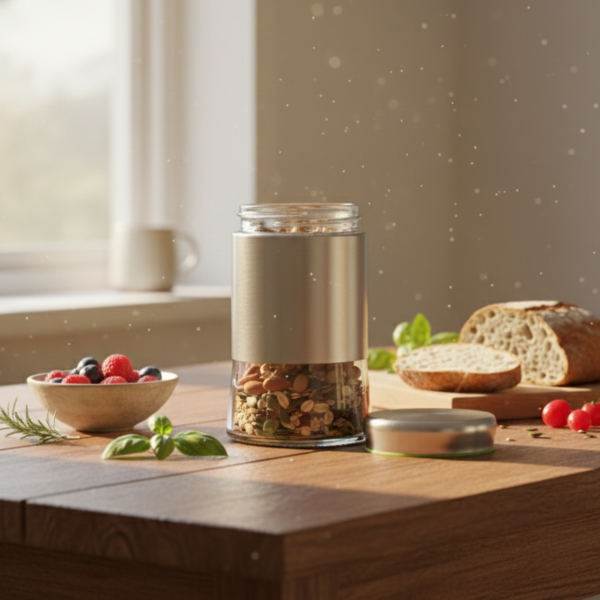
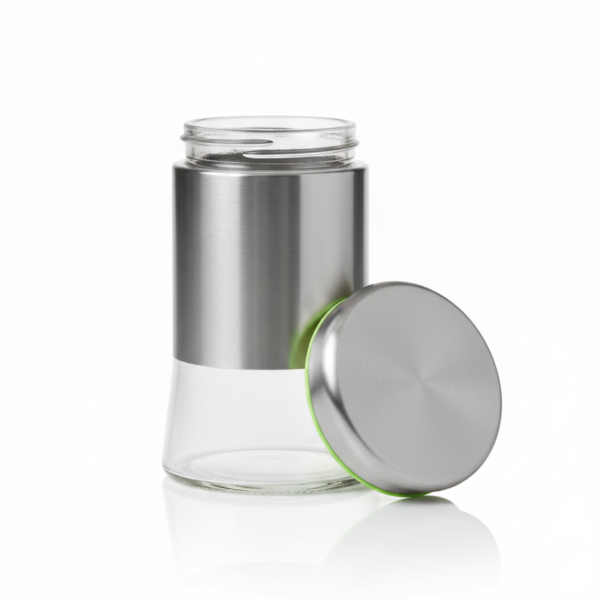
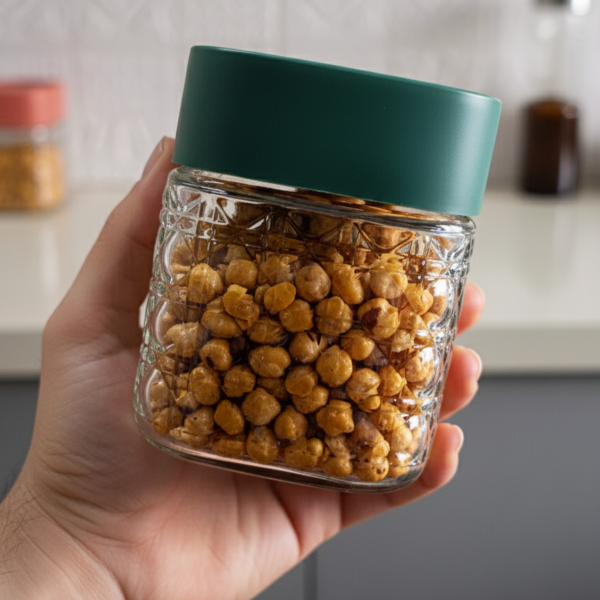
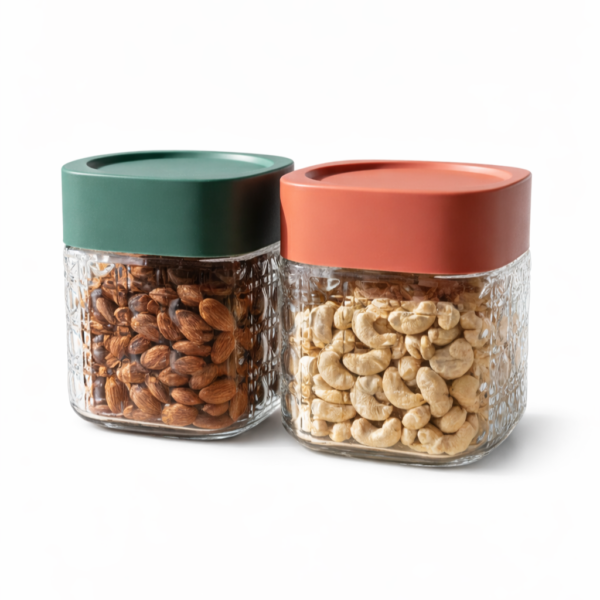
Glass jars are food-grade glass containers with a sealing lid – usually metal screw-top or clip-lock – used to store spices, pickles, rice, dals, sugar and other pantry items without picking up smell or reacting with what’s inside. Once a kitchen switches to glass jars, the constant cycle of replacing stained, smelly plastic dabbas basically stops, because glass doesn’t wear the way plastic does.
Silicox supplies glass jars out of Ahmedabad to homes, restaurants, distributors, retailers and hotels across India. Every jar that goes into stock gets checked for lid seal quality and glass consistency before dispatch, and packed in a way that’s meant to survive a truck ride, not just look nice on a warehouse shelf.
The range covers small spice jars, wide-mouth pickle jars, and large-format canisters for restaurant or retail use. Beyond the website, Silicox glass jars are also listed on Amazon and Meesho for smaller quantity buyers who’d rather order through a marketplace they already use.
🍽️
Food-Grade GlassNon-porous, odour-free, safe for daily pantry use
Also on Amazon & MeeshoBuy small quantities via marketplace, bulk direct from us
🏷️
Private Label AvailableCustom branding on eligible bulk orders
The Case for Glass
Why Glass Jars Beat Plastic for Everyday Storage
It comes down to one property: glass is non-porous. A plastic box that’s held achaar for a week carries that turmeric-and-mustard-oil smell into whatever you put in it next – glass doesn’t do this. That’s the real reason kitchens that cycle through spices, pickles, dals and grains eventually move off multi-use plastic tubs and onto glass jars with a proper lid.
The second advantage takes longer to notice. Wash a plastic dabba a few hundred times and it clouds up, picks up fine scratches, and starts holding smell even right after a wash. Glass goes through the same cycle and comes out looking basically the same – which only really becomes obvious when you put a two-year-old plastic container next to a two-year-old jar.
One honest trade-off: glass handles sudden temperature swings worse than plastic, so don’t take a cold jar straight to a hot stove or fill it with boiling liquid. For dry pantry storage – which is how most people actually use these – this basically never comes up.
Property
Glass Jar
Plastic Container
Odour retention
None – non-porous surface
Absorbs smells over repeated use
Stain resistance
Won’t discolour from spices or oil
Turmeric and oil stain permanently
Durability under washing
Stays smooth after hundreds of washes
Scratches and clouds over time
Contents visible
Fully transparent
Often opaque
Weight
Heavier
Lighter, easier to carry
The Lid Is Half the Product
What Actually Makes a Glass Jar “Airtight”
An airtight glass jar isn’t really about the glass – it’s about the lid. Three types show up most: a metal screw cap with a rubber or silicone gasket, a clip-lock lid with a silicone band, and a plain wooden lid, which looks great on a shelf but was never built to seal anything. If you’re storing something long-term, look for a visible gasket. That’s the part doing the actual sealing, not the lid material itself.
1
Fill halfway with water
Room temperature is fine – you’re testing the seal, not the glass.
2
Close the lid at normal pressure
Same pressure you’d use closing a jar of spices – don’t over-tighten.
3
Turn it upside down for 30 seconds
Hold it over a sink and watch the joint between lid and rim.
4
Read the result
No movement: seal’s working fine. A slow drip: okay for dry goods, not for liquids. Water runs out immediately: that lid isn’t sealing – don’t trust it for storage.
How to Choose
Picking the Right Size Glass Jar
The most common mistake buyers make with glass jars isn’t glass-versus-plastic – it’s picking the wrong size. Too small, and you’re refilling every few days. Too large, and a half-empty jar traps more air than it should over the food, which speeds up staleness.
Pantry Item
2-Person Household
5-6 Person Household
Rice
3L jar
6L canister
Sugar
1.5L jar
3L jar
Turmeric powder
250ml jar
500ml jar
Dal (lentils)
1.5L jar
3L jar
For Businesses
Glass Jars for Restaurants, Retailers & Hotels
A home kitchen buys glass jars to bring some order to a shelf. Businesses need more specific things from the same product – here’s what actually matters for each segment Silicox works with.
Restaurants & Cloud Kitchens
Order 200 jars, and 200 identical jars is the whole point – same weight, same lid tightness, same rim finish. Inconsistency slows a kitchen line down fast. Ask for a sample before committing to the full order.
Retail Stores & E-Commerce Sellers
For resale, buyers judge on appearance, lid mechanism, and how heavy the jar feels in hand. Private labelling is available on eligible volumes without the minimum order sizes an importer would demand.
Hotels & Hospitality Groups
Procurement teams usually want documentation on food-safety standards and delivery timelines before a vendor gets approved. Silicox can provide product specs to support that onboarding process.
Distributors & Wholesalers
What matters most here is consistent supply across reorder cycles and packaging that actually survives the distribution chain. Volume discount structures are in place on the core SKUs.
Why Silicox
Why Buy Glass Jars From Silicox
What Matters
Silicox
Typical General-Trade Supplier
Lid seal quality
Checked for a functional gasket, not decoration-only
Often unspecified
Stock consistency
Ready stock on core SKUs
Frequently import-on-order, longer lead times
Packaging for transit
Cell-pack trays, rated cartons
Basic packaging, higher breakage rate
Private label
Available on eligible volumes
Rarely offered
Where to buy
Direct, plus Amazon & Meesho
Usually one channel only
Buying Options
Where to Buy Silicox Glass Jars
Different order sizes suit different channels – here’s the honest breakdown.
Direct from Silicox
Best route for bulk, wholesale, or private-label orders – restaurants, retailers, distributors and hotels typically buy this way, since pricing and packaging can be matched to the actual order size.
Amazon
Silicox glass jars are listed on Amazon for single-set or small-quantity home buyers who want standard delivery and returns through a marketplace they already trust.
Meesho
Also available on Meesho, mainly for resellers and home buyers ordering smaller quantities at marketplace pricing.
Questions & Answers
Frequently Asked Questions About Glass Jars
What are glass jars used for?
Glass jars are food-grade glass containers with a sealing lid, used to store spices, pickles, rice, dals, sugar and other pantry staples. Because glass is non-porous, they don’t absorb odours or stain the way plastic containers eventually do – which is why glass jars are the standard choice for anything stored long-term.
Are glass jars better than plastic containers?
For long-term dry storage, yes – glass wins on odour retention, stain resistance, and how it holds up under repeated washing. Plastic has an edge in weight and breakage resistance, which matters more for food that travels, like a tiffin. For a stationary pantry shelf, glass jars are the more practical pick.
What size glass jar do I need for 1kg of rice?
1kg of uncooked rice takes up roughly 1.25-1.5 litres, so a jar in that range is the practical minimum, with a bit of headspace left for scooping. A household buying 2-3kg at a time is usually better off with a 3L jar. Check the size guide above for other pantry staples.
How do I check if a glass jar lid is actually airtight?
Fill it halfway with water, close the lid at normal pressure, and turn it upside down over a sink for 30 seconds. No movement at the rim means the seal’s working. A slow drip is fine for dry goods but not liquids; if water runs out immediately, that lid isn’t sealing.
Are glass jars safe for storing Indian pickles (achaar)?
Glass has been the go-to material for Indian pickle storage long before plastic even existed, and for good reason – it doesn’t absorb the oil and spice compounds that define achaar and murabba, the way plastic eventually does. Go with a wide-mouth jar for easier scooping, and an oil-resistant seal rather than a decorative wooden lid.
What’s the difference between an airtight jar and a vacuum-sealed jar?
An airtight jar restricts air movement at the seal but doesn’t remove the air already inside. A vacuum-sealed jar actively pulls that air out, which extends shelf life further but needs specific equipment. Standard glass jars for household pantry use are airtight, not vacuum-sealed – and that’s enough for spices, grains and most dry goods.
How long do glass jars last?
The glass itself doesn’t really wear out – it won’t stain, absorb odour, or degrade from repeated washing the way plastic does. In practice, the lid gasket is what eventually needs replacing, since that’s the part taking the physical wear. Jars with replaceable gaskets are the smarter long-term buy for that reason.
Can glass jars go in the freezer?
Standard glass jars handle freezer temperatures reasonably well, as long as you leave some headspace for liquids to expand and avoid moving the jar straight from freezer to a hot surface. For dry pantry goods, freezing usually isn’t necessary, but it’s safe when it’s needed.
Can glass jars be sterilised at home?
A common method: wash thoroughly, place upright in a cold oven, heat to around 160°C, and hold for 15 minutes. Rubber or silicone gaskets should be sterilised separately by boiling, since oven heat can warp them. This is general food-safety guidance, not specific to any one jar model.
Can glass jars be used for fermentation, like kimchi or curd?
Yes, and glass is actually a good material for it – the acids produced during fermentation don’t react with glass the way they can with metal or lower-grade plastic. Keep the lid loose rather than fully sealed during active fermentation, since the process releases gas that needs somewhere to go.
Is glass safe for storing honey?
Glass doesn’t react with honey’s natural acidity or absorb its aroma, which is why most premium honey ships in it. A tightly sealing lid matters here too, since moisture getting in is what causes raw honey to ferment over time.
Is Silicox available on Amazon or Meesho?
Yes – Silicox glass jars are listed on both Amazon and Meesho for buyers who want smaller quantities through a marketplace. For bulk, wholesale or private-label orders, buying direct from Silicox works out better on pricing and packaging.
Do you supply glass jars to restaurants across India?
Restaurants, cafés and cloud kitchens make up a large share of Silicox’s buyers across India. They typically need consistent quality across a large batch of identical jars, reliable reorder stock, and packaging that survives bulk delivery. Contact us with your monthly requirement for pricing.
Is private labelling available on bulk glass jar orders?
Yes, on eligible volumes – retailers and e-commerce brands can sell these jars under their own branding. Share the target SKU, estimated monthly quantity, and branding brief, and we’ll confirm minimum order quantity and label lead times.
What’s the minimum order quantity for wholesale glass jars?
This varies by product and buyer type – retail sellers generally have a lower threshold than formal distributors. Reach out with your requirement and we’ll confirm the MOQ for that specific SKU.
Whether it’s a single set for a home kitchen or a recurring bulk order for a restaurant, retailer or distributor, Silicox supplies food-grade glass jars with reliable stock and nationwide delivery. Smaller quantities are also available through Amazon and Meesho.
Glass jars are food-grade glass containers with a sealing lid – usually metal screw-top or clip-lock – used to store spices, pickles, rice, dals, sugar and other pantry items without picking up smell or reacting with what’s inside. Once a kitchen switches to glass jars, the constant cycle of replacing stained, smelly plastic dabbas basically stops, because glass doesn’t wear the way plastic does.
Silicox supplies glass jars out of Ahmedabad to homes, restaurants, distributors, retailers and hotels across India. Every jar that goes into stock gets checked for lid seal quality and glass consistency before dispatch, and packed in a way that’s meant to survive a truck ride, not just look nice on a warehouse shelf.
The range covers small spice jars, wide-mouth pickle jars, and large-format canisters for restaurant or retail use. Beyond the website, Silicox glass jars are also listed on Amazon and Meesho for smaller quantity buyers who’d rather order through a marketplace they already use.
🍽️
Food-Grade GlassNon-porous, odour-free, safe for daily pantry use
Also on Amazon & MeeshoBuy small quantities via marketplace, bulk direct from us
🏷️
Private Label AvailableCustom branding on eligible bulk orders
The Case for Glass
Why Glass Jars Beat Plastic for Everyday Storage
It comes down to one property: glass is non-porous. A plastic box that’s held achaar for a week carries that turmeric-and-mustard-oil smell into whatever you put in it next – glass doesn’t do this. That’s the real reason kitchens that cycle through spices, pickles, dals and grains eventually move off multi-use plastic tubs and onto glass jars with a proper lid.
The second advantage takes longer to notice. Wash a plastic dabba a few hundred times and it clouds up, picks up fine scratches, and starts holding smell even right after a wash. Glass goes through the same cycle and comes out looking basically the same – which only really becomes obvious when you put a two-year-old plastic container next to a two-year-old jar.
One honest trade-off: glass handles sudden temperature swings worse than plastic, so don’t take a cold jar straight to a hot stove or fill it with boiling liquid. For dry pantry storage – which is how most people actually use these – this basically never comes up.
Property
Glass Jar
Plastic Container
Odour retention
None – non-porous surface
Absorbs smells over repeated use
Stain resistance
Won’t discolour from spices or oil
Turmeric and oil stain permanently
Durability under washing
Stays smooth after hundreds of washes
Scratches and clouds over time
Contents visible
Fully transparent
Often opaque
Weight
Heavier
Lighter, easier to carry
The Lid Is Half the Product
What Actually Makes a Glass Jar “Airtight”
An airtight glass jar isn’t really about the glass – it’s about the lid. Three types show up most: a metal screw cap with a rubber or silicone gasket, a clip-lock lid with a silicone band, and a plain wooden lid, which looks great on a shelf but was never built to seal anything. If you’re storing something long-term, look for a visible gasket. That’s the part doing the actual sealing, not the lid material itself.
1
Fill halfway with water
Room temperature is fine – you’re testing the seal, not the glass.
2
Close the lid at normal pressure
Same pressure you’d use closing a jar of spices – don’t over-tighten.
3
Turn it upside down for 30 seconds
Hold it over a sink and watch the joint between lid and rim.
4
Read the result
No movement: seal’s working fine. A slow drip: okay for dry goods, not for liquids. Water runs out immediately: that lid isn’t sealing – don’t trust it for storage.
How to Choose
Picking the Right Size Glass Jar
The most common mistake buyers make with glass jars isn’t glass-versus-plastic – it’s picking the wrong size. Too small, and you’re refilling every few days. Too large, and a half-empty jar traps more air than it should over the food, which speeds up staleness.
Pantry Item
2-Person Household
5-6 Person Household
Rice
3L jar
6L canister
Sugar
1.5L jar
3L jar
Turmeric powder
250ml jar
500ml jar
Dal (lentils)
1.5L jar
3L jar
For Businesses
Glass Jars for Restaurants, Retailers & Hotels
A home kitchen buys glass jars to bring some order to a shelf. Businesses need more specific things from the same product – here’s what actually matters for each segment Silicox works with.
Restaurants & Cloud Kitchens
Order 200 jars, and 200 identical jars is the whole point – same weight, same lid tightness, same rim finish. Inconsistency slows a kitchen line down fast. Ask for a sample before committing to the full order.
Retail Stores & E-Commerce Sellers
For resale, buyers judge on appearance, lid mechanism, and how heavy the jar feels in hand. Private labelling is available on eligible volumes without the minimum order sizes an importer would demand.
Hotels & Hospitality Groups
Procurement teams usually want documentation on food-safety standards and delivery timelines before a vendor gets approved. Silicox can provide product specs to support that onboarding process.
Distributors & Wholesalers
What matters most here is consistent supply across reorder cycles and packaging that actually survives the distribution chain. Volume discount structures are in place on the core SKUs.
Why Silicox
Why Buy Glass Jars From Silicox
What Matters
Silicox
Typical General-Trade Supplier
Lid seal quality
Checked for a functional gasket, not decoration-only
Often unspecified
Stock consistency
Ready stock on core SKUs
Frequently import-on-order, longer lead times
Packaging for transit
Cell-pack trays, rated cartons
Basic packaging, higher breakage rate
Private label
Available on eligible volumes
Rarely offered
Where to buy
Direct, plus Amazon & Meesho
Usually one channel only
Buying Options
Where to Buy Silicox Glass Jars
Different order sizes suit different channels – here’s the honest breakdown.
Direct from Silicox
Best route for bulk, wholesale, or private-label orders – restaurants, retailers, distributors and hotels typically buy this way, since pricing and packaging can be matched to the actual order size.
Amazon
Silicox glass jars are listed on Amazon for single-set or small-quantity home buyers who want standard delivery and returns through a marketplace they already trust.
Meesho
Also available on Meesho, mainly for resellers and home buyers ordering smaller quantities at marketplace pricing.
Questions & Answers
Frequently Asked Questions About Glass Jars
What are glass jars used for?
Glass jars are food-grade glass containers with a sealing lid, used to store spices, pickles, rice, dals, sugar and other pantry staples. Because glass is non-porous, they don’t absorb odours or stain the way plastic containers eventually do – which is why glass jars are the standard choice for anything stored long-term.
Are glass jars better than plastic containers?
For long-term dry storage, yes – glass wins on odour retention, stain resistance, and how it holds up under repeated washing. Plastic has an edge in weight and breakage resistance, which matters more for food that travels, like a tiffin. For a stationary pantry shelf, glass jars are the more practical pick.
What size glass jar do I need for 1kg of rice?
1kg of uncooked rice takes up roughly 1.25-1.5 litres, so a jar in that range is the practical minimum, with a bit of headspace left for scooping. A household buying 2-3kg at a time is usually better off with a 3L jar. Check the size guide above for other pantry staples.
How do I check if a glass jar lid is actually airtight?
Fill it halfway with water, close the lid at normal pressure, and turn it upside down over a sink for 30 seconds. No movement at the rim means the seal’s working. A slow drip is fine for dry goods but not liquids; if water runs out immediately, that lid isn’t sealing.
Are glass jars safe for storing Indian pickles (achaar)?
Glass has been the go-to material for Indian pickle storage long before plastic even existed, and for good reason – it doesn’t absorb the oil and spice compounds that define achaar and murabba, the way plastic eventually does. Go with a wide-mouth jar for easier scooping, and an oil-resistant seal rather than a decorative wooden lid.
What’s the difference between an airtight jar and a vacuum-sealed jar?
An airtight jar restricts air movement at the seal but doesn’t remove the air already inside. A vacuum-sealed jar actively pulls that air out, which extends shelf life further but needs specific equipment. Standard glass jars for household pantry use are airtight, not vacuum-sealed – and that’s enough for spices, grains and most dry goods.
How long do glass jars last?
The glass itself doesn’t really wear out – it won’t stain, absorb odour, or degrade from repeated washing the way plastic does. In practice, the lid gasket is what eventually needs replacing, since that’s the part taking the physical wear. Jars with replaceable gaskets are the smarter long-term buy for that reason.
Can glass jars go in the freezer?
Standard glass jars handle freezer temperatures reasonably well, as long as you leave some headspace for liquids to expand and avoid moving the jar straight from freezer to a hot surface. For dry pantry goods, freezing usually isn’t necessary, but it’s safe when it’s needed.
Can glass jars be sterilised at home?
A common method: wash thoroughly, place upright in a cold oven, heat to around 160°C, and hold for 15 minutes. Rubber or silicone gaskets should be sterilised separately by boiling, since oven heat can warp them. This is general food-safety guidance, not specific to any one jar model.
Can glass jars be used for fermentation, like kimchi or curd?
Yes, and glass is actually a good material for it – the acids produced during fermentation don’t react with glass the way they can with metal or lower-grade plastic. Keep the lid loose rather than fully sealed during active fermentation, since the process releases gas that needs somewhere to go.
Is glass safe for storing honey?
Glass doesn’t react with honey’s natural acidity or absorb its aroma, which is why most premium honey ships in it. A tightly sealing lid matters here too, since moisture getting in is what causes raw honey to ferment over time.
Is Silicox available on Amazon or Meesho?
Yes – Silicox glass jars are listed on both Amazon and Meesho for buyers who want smaller quantities through a marketplace. For bulk, wholesale or private-label orders, buying direct from Silicox works out better on pricing and packaging.
Do you supply glass jars to restaurants across India?
Restaurants, cafés and cloud kitchens make up a large share of Silicox’s buyers across India. They typically need consistent quality across a large batch of identical jars, reliable reorder stock, and packaging that survives bulk delivery. Contact us with your monthly requirement for pricing.
Is private labelling available on bulk glass jar orders?
Yes, on eligible volumes – retailers and e-commerce brands can sell these jars under their own branding. Share the target SKU, estimated monthly quantity, and branding brief, and we’ll confirm minimum order quantity and label lead times.
What’s the minimum order quantity for wholesale glass jars?
This varies by product and buyer type – retail sellers generally have a lower threshold than formal distributors. Reach out with your requirement and we’ll confirm the MOQ for that specific SKU.
Whether it’s a single set for a home kitchen or a recurring bulk order for a restaurant, retailer or distributor, Silicox supplies food-grade glass jars with reliable stock and nationwide delivery. Smaller quantities are also available through Amazon and Meesho.